Germany
Driving Rules in Germany (2025): Laws, Limits, and Everyday Road Behavior
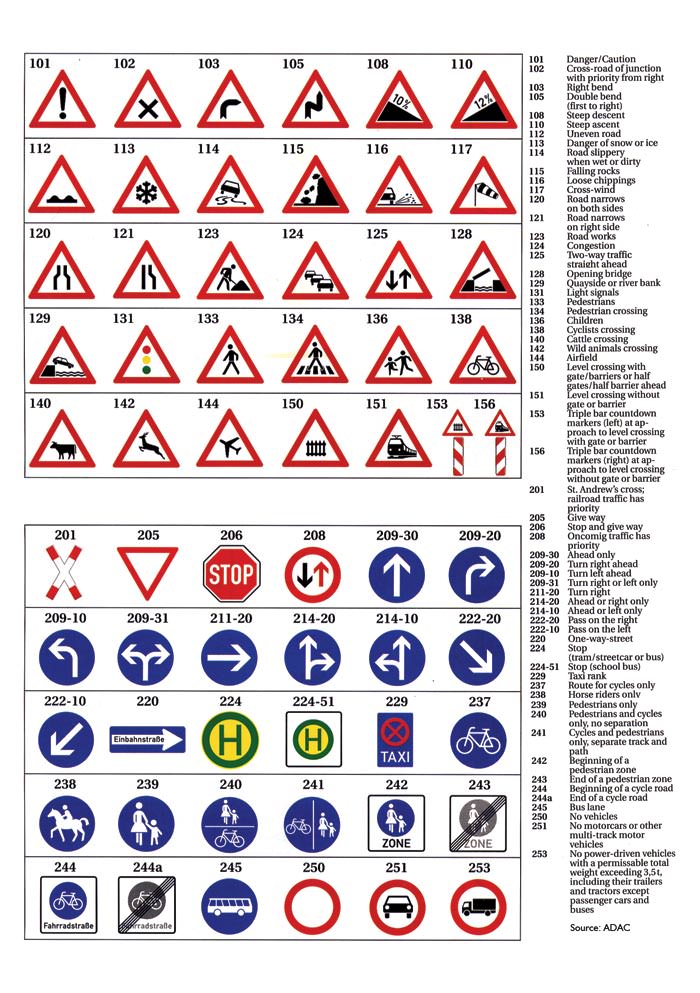
Germany’s driving rules are governed by a tightly integrated legal framework that regulates who may drive, how vehicles must be equipped, and how all road users must behave. This guide synthesizes official sources to explain licensing, speed limits, right of way, alcohol and drug thresholds, penalties, environmental zones, and the significant 2024–2025 reforms to the Straßenverkehrs-Ordnung (StVO).
- The StVO and related laws (StVG, Fahrerlaubnis-Verordnung, etc.) define nationwide driving behavior, licensing, and penalties.
- Default limits: 50 km/h in built‑up areas, 100 km/h on rural roads, and a recommended 130 km/h on many Autobahn sections without posted limits.
- Alcohol and drug rules are strict: 0.5 ‰ BAC for most drivers but 0.0 ‰ for new, young, and professional drivers.
- Penalties range from small fines to points in the Flensburg register, driving bans, and full license withdrawal in serious cases.
- Environmental zones, stronger protections for cyclists and pedestrians, and upcoming rules on remote vehicle control are reshaping German traffic law.
Legal Framework and Key Laws Governing Driving in Germany
Germany’s driving rules are codified in several interlocking federal laws and regulations. The central legal instrument is the
Straßenverkehrs‑Ordnung (StVO), which sets out rules of behavior in road traffic, use of roads, speed, overtaking, right of way, turning, parking, lighting, and signs and signals. The StVO is a federal regulation and therefore applies uniformly throughout Germany.
The currently consolidated version was significantly amended via Article 24 of a federal regulation on 11 December 2024, with changes taking effect on 1 January 2025. These amendments modify various sections, in particular rules on conduct in traffic, speed, overtaking, and the protection of non‑motorised road users such as cyclists and pedestrians.
Supporting legal structures include:
• The Straßenverkehrsgesetz (StVG), which provides the statutory framework and empowers the federal government to issue traffic regulations such as the StVO and sets out many penalties.
• The Fahrerlaubnis‑Verordnung (FeV), which regulates driving‑licence classes, age requirements, and medical fitness rules.
• The Fahrzeug‑Zulassungs‑Verordnung, which governs vehicle registration and technical roadworthiness.
• From December 2025, the Straßenverkehr‑Fernlenk‑Verordnung, which will regulate the remote control and certain autonomous operation of vehicles.
Together these instruments form the broader field of Straßenverkehrsrecht (traffic law). For motorways, the Autobahn‑Richtgeschwindigkeits‑Verordnung remains in force. It does not impose a binding limit but recommends a Richtgeschwindigkeit (advisory speed) of 130 km/h on certain Autobahn sections where no higher or lower limit is posted.
- The StVO is the central federal regulation defining day‑to‑day driving rules in Germany.
- A major StVO amendment took effect on 1 January 2025, updating rules on speed, overtaking, junction behavior and cycling.
- Other core traffic laws include StVG, FeV, the vehicle registration regulation, and a new regulation on remote vehicle control due from December 2025.
- The 130 km/h Richtgeschwindigkeit on many Autobahn sections is a recommendation, not a general compulsory limit.
- The StVO was last amended via Article 24 of a federal ordinance on 11 December 2024; the amendment has been in effect since 1 January 2025.
- The Autobahn‑Richtgeschwindigkeit was introduced in 1978; its current form dates to a 2009 update.
| Name | Abbreviation | Contents | Effective Date / Notes |
|---|---|---|---|
| Straßenverkehrs‑Ordnung | StVO | General traffic behavior, speed regulation, road signs, right of way, stopping and parking rules. | New consolidated version 6 March 2013; latest major amendment effective 1 January 2025 via Article 24 of an ordinance dated 11 December 2024. |
| Straßenverkehrsgesetz | StVG | Framework act enabling traffic regulations and setting many penalties and liability rules. | Long‑standing federal statute; provides legal basis for the StVO and related regulations. |
| Autobahn‑Richtgeschwindigkeits‑Verordnung | BABRiGeschwV | Recommends a speed of 130 km/h on designated Autobahn sections where no specific limit is posted. | First issued in 1978; current legal status based on a 2009 update. |
| Fahrerlaubnis‑Verordnung | FeV | Regulates driving‑licence classes, minimum ages, medical requirements, and testing procedures. | Ongoing regulation interacting with the StVG; updated periodically to reflect EU law and safety standards. |
Driving Licenses: Types, Requirements, and Processes
Germany recognises multiple classes of driving licences, each corresponding to specific vehicle categories. Common categories include:
class B for passenger cars, classes A, A1, A2 for motorcycles, and C / C1 for heavy goods vehicles, alongside D / D1 for buses and coaches.
Obtaining a licence usually involves enrolling at a certified driving school. For a passenger‑car licence (class B), learners must complete at least 14 hours of theoretical instruction. Motorcycle licences (A1, A2, A) require at least 16 theory hours. In addition, practical lessons are mandatory, with minimum numbers prescribed especially for trucks and buses. After training, candidates must pass both a theoretical exam and a practical driving test administered by authorised examiners.
Minimum age thresholds are strictly defined. For light motorcycles (class A1) the minimum age is 16; for more powerful bikes (A2) it is 18; and for the full‑power category A, generally 24, unless accessed progressively from lower classes. The normal minimum age for class B (cars) is 18, though special supervised schemes (accompanied driving) may allow earlier driving under conditions. Heavy vehicle and passenger‑transport licences require higher ages and medical checks.
Holders of licences issued by other EU/EEA member states can usually drive in Germany on their existing licence and may exchange or extend their licence via the local driving‑licence authority if needed. For professional or heavier categories (C, D), regular medical and vision examinations, plus periodic renewal, are compulsory. Authorities can also require medical‑psychological evaluations (MPU) when driving fitness is in doubt, for example after serious offences.
- Each licence class covers a defined vehicle type: B for cars, A‑classes for motorcycles, C/C1 for trucks, D/D1 for buses.
- Typical minimum ages: 16 for A1, 18 for A2 and B, 24 for full class A unless gained via progressive access.
- At least 14 theory hours are required for class B and 16 for motorcycle classes; practical lessons and both theory and road tests are mandatory.
- EU/EEA licences are widely recognised, but exchanges, extensions, and medical checks apply especially for professional and heavy‑vehicle drivers.
- Class B (cars): at least 14 hours of theoretical training before the exam.
- Motorcycle classes A1/A2/A: at least 16 hours of theory.
- Minimum ages: A1 – 16 years; B – 18 years; full A – typically 24 years.
| License Class | Vehicle Type | Minimum Age |
|---|---|---|
| A1 | Motorcycles up to 125 cm³ or equivalent power. | 16 years |
| A2 | Motorcycles up to 35 kW (medium‑power). | 18 years |
| A (full) | Motorcycles over 35 kW (high‑power). | 24 years (unless reached via progressive steps). |
| B | Passenger cars (typically up to 3.5 t with up to 8 passenger seats). | 18 years (with exceptions for supervised schemes). |
| C1 / C | Medium and heavy goods vehicles with stricter medical fitness requirements. | Typically 18–21+ depending on vehicle weight and intended use. |
Speed Regulations and Limits
Germany’s speed regulations depend on road type, vehicle class, and posted signage. Inside built‑up areas (innerorts), the default maximum speed for passenger cars is 50 km/h, unless a different limit is indicated. Many residential streets, school zones, and traffic‑calmed neighbourhoods introduce 30 km/h or lower limits to improve safety and reduce noise.
Outside built‑up areas on non‑motorway rural roads (Landstraßen), the standard maximum for passenger cars is 100 km/h, again subject to local signage. On German Autobahns, the situation is more complex: some stretches have explicit limits (for example 80, 100, 120 or 130 km/h), while others are “unrestricted” in the sense that no mandatory maximum is posted. Where no limit applies, a recommended speed (Richtgeschwindigkeit) of 130 km/h applies to cars and light vehicles up to 3.5 tonnes under good conditions.
Regardless of the signposted limit, drivers must always adapt their speed to conditions such as traffic density, road and surface quality, visibility, weather, vehicle load, and their own ability. Even on unrestricted Autobahn sections, very high speeds can increase civil and sometimes criminal liability after an accident because they are regarded as creating an “increased operating risk” (erhöhte Betriebsgefahr).
Special maximum speeds apply to heavy goods vehicles, buses, and vehicles with trailers, generally lower than for cars on both rural roads and motorways. Temporary and variable limits are common, often linked to weather, congestion, or construction zones, and are displayed on electronic signs. Some signs state that lower limits only apply “bei Nässe” (when wet) or under icy conditions. In addition, minimum speed signs (sign 275) may require a certain minimum speed in particular lanes; at the same time, section 3(2) StVO prohibits excessively slow driving that unnecessarily impedes traffic.
- Standard limits: 50 km/h in built‑up areas and 100 km/h on rural roads for cars, unless different signs apply.
- On the Autobahn, many sections are either explicitly limited or unrestricted; where no limit exists, 130 km/h is the recommended speed for light vehicles.
- Drivers must always adjust speed to road, weather, traffic, and personal capability, even when the posted limit would allow higher speeds.
- Heavy vehicles and vehicles with trailers have stricter maximum speeds; temporary, conditional, and minimum‑speed signs further refine the rules.
- Default intra‑urban limit: 50 km/h for passenger cars.
- Default limit outside built‑up areas on rural roads: 100 km/h for passenger cars.
- Recommended Autobahn speed (Richtgeschwindigkeit): 130 km/h on sections without a posted limit.
| Road Type | Vehicle Type | Default Limit / Advisory Speed |
|---|---|---|
| Built‑up areas (innerorts) | Passenger cars and light vehicles | 50 km/h |
| Residential or school zones | All vehicles | Often 30 km/h or less (as signposted) |
| Rural roads (non‑Autobahn) | Passenger cars | 100 km/h |
| Autobahn sections with posted limit | All vehicles | Limit as displayed (e.g. 80–130 km/h; may be variable) |
| Autobahn sections without limit | Passenger cars and vehicles ≤ 3.5 t | Recommended 130 km/h (Richtgeschwindigkeit) |
Right of Way, Overtaking, Signalling, and Road Behavior
Right‑of‑way rules in Germany are designed to be predictable and consistent. At unmarked intersections with no signs or traffic lights, the principle of “right before left” (Rechts vor Links) applies: drivers must yield to vehicles approaching from the right. This rule is especially important in residential side streets and less busy junctions.
At roundabouts, right of way depends on signage. Typically, entering vehicles yield to traffic already circulating in the roundabout when signs indicate a roundabout with priority. However, drivers should always verify signs because priority can be configured differently in some local situations. When turning or changing lanes, drivers must always signal in good time and perform mirror and shoulder checks to avoid endangering cyclists, pedestrians, or other vehicles.
Overtaking is generally performed on the left. Passing on the right is prohibited in most situations and only allowed in specific, narrowly defined cases (for example, slow‑moving queues in separate marked lanes on multi‑lane roads). Slower traffic must keep to the right‑hand lane, especially on motorways; using the left lane for cruising without overtaking is discouraged and can itself lead to enforcement.
Overtaking is forbidden where visibility is limited (sharp curves, crests), near many junctions, and wherever prohibit‑overtaking signs (Überholverbot) are posted. When overtaking, drivers must maintain safe lateral distance, particularly from cyclists and pedestrians, and finish the maneuver as promptly and safely as possible.
Correct use of lighting and signals is also legally required. Indicators must be used for every lane change, turn, and when entering or leaving flowing traffic (for example, when leaving a parking space). Dipped headlights are required at night and in poor visibility; high beams may only be used when they will not dazzle others. Hazard warning lights and a warning triangle must be used in breakdown or accident situations where a vehicle becomes an obstacle, with distances depending on the road type. Motorcyclists must wear approved helmets; many are also required to use lights even during the day for visibility.
- At unsigned intersections, vehicles from the right have priority (“right before left”).
- Overtaking is normally only allowed on the left; overtaking on the right is heavily restricted.
- Lane discipline is important: slower vehicles must keep right, especially on multi‑lane roads and motorways.
- Signalling and proper use of lights are mandatory for lane changes, turns, and in low‑visibility conditions.
| Situation | Default Rule |
|---|---|
| Unmarked intersection with no signs or lights | Vehicles coming from the right have priority (“right before left”). |
| Roundabout | Right of way follows posted signs; usually, vehicles already in the roundabout have priority, entering vehicles must yield. |
| Overtaking on ordinary roads | Must be done on the left, only when the maneuver can be completed safely and without violating no‑overtaking signs. |
| Lane usage on multi‑lane roads / Autobahn | Slower traffic keeps right; left‑hand lanes are primarily for overtaking, not for continuous cruising. |
Alcohol, Drugs, and Impairment Laws
Germany applies strict rules to driving under the influence of alcohol or drugs. For most drivers, the legal blood alcohol concentration (BAC) limit is 0.5 ‰. Exceeding this threshold typically results in administrative penalties such as fines, demerit points in the Flensburg driver register, and temporary driving bans.
Even at lower levels, between about 0.3 ‰ and 0.49 ‰, drivers can face serious consequences if they are involved in an accident or display clear signs of impairment. In such circumstances, they may be deemed relatively unfit to drive and can be prosecuted based on the overall danger posed. At 1.1 ‰ or higher, German law usually assumes absolute inability to drive, which triggers criminal sanctions regardless of outward behavior.
Special zero‑tolerance rules apply to new drivers in their probationary period and drivers under 21, as well as many professional drivers: for them, the limit is effectively 0.0 ‰. Any detectable alcohol can lead to sanctions, including fines, points, extension of the probationary period, and mandatory training courses. Similar strict standards apply to commercial passenger transport.
Illegal drugs are treated at least as strictly as alcohol. Even small detectable amounts of substances such as THC can be enough to trigger penalties, especially if combined with unsafe driving or other traffic offences. When authorities doubt a driver’s ongoing fitness to drive, they can order a medical‑psychological assessment (MPU) before considering licence reinstatement. Repeated or severe offences, high BAC levels, or dangerous driving can lead to licence withdrawal and even imprisonment.
- Standard legal BAC limit is 0.5 ‰ for most drivers; exceeding it usually leads to fines, points, and a driving ban.
- From 0.3 ‰ upwards, drivers can face penalties if they cause accidents or show impairment.
- At 1.1 ‰ or higher, drivers are considered absolutely unfit to drive, triggering criminal proceedings and licence withdrawal.
- New or young drivers and many professionals are subject to a 0.0 ‰ alcohol limit; drug impairment is also strictly penalised.
- Standard BAC limit: 0.5 ‰ for most drivers.
- 0.0 ‰ BAC for drivers under 21 and during the probationary period, as well as many professional drivers.
| Driver Category / Condition | Legal BAC Limit | Typical Consequences if Violated |
|---|---|---|
| Most drivers (general rule) | 0.5 ‰ | Administrative fine, points in Flensburg, and temporary driving ban. |
| Accident or serious traffic offence with BAC 0.3–0.49 ‰ | No fixed limit; penalties possible below 0.5 ‰ | Can result in criminal charges based on proven impairment and danger caused. |
| Absolute inability to drive | ≈ 1.1 ‰ or higher | Criminal offence, typically involving licence withdrawal and potentially imprisonment. |
| New / young drivers and many professionals | 0.0 ‰ | Strict penalties even for low levels of alcohol, including fines, points, and extended probation. |
Seat Belts, Child Restraints, Helmets and Safety Equipment
Seat belt use is mandatory in Germany for all occupants in a moving vehicle, whether in the front or rear seats. Vehicles must be equipped with working belts for each seat, and drivers are generally responsible for ensuring that children and dependent passengers are buckled up properly. Only a few narrowly defined occupational and special‑use exceptions exist.
Particular care applies to children. Child restraint systems conforming to EU safety standards are compulsory for children under 12 years of age unless they are already at least 1.50 m tall. Depending on a child’s weight and height, this may mean a rear‑facing baby seat, standard child seat, or booster seat. Using adult belts alone for smaller children is not sufficient and is subject to fines.
Motorcyclists and moped riders must wear an approved motorcycle helmet. Many motorcycles must use dipped headlights even during daylight hours to increase visibility. Reflective elements on clothing and equipment are strongly recommended and in some cases legally required for certain vehicles.
In addition, German law requires most vehicles to carry specific emergency and safety equipment. This typically includes a warning triangle, a first‑aid kit meeting national standards, and at least one high‑visibility reflective vest. In the event of a breakdown or accident, this equipment must be used to secure the scene and warn other drivers, especially on high‑speed roads.
- Seat belts are mandatory for all vehicle occupants when the vehicle is in motion; exceptions are very limited.
- Children require appropriate EU‑approved child seats or boosters until age 12, unless they are at least 1.50 m tall.
- Helmets are compulsory for motorcyclists and moped riders; daytime running lights or dipped headlights are common requirements.
- Most vehicles must carry a warning triangle, first‑aid kit, and reflective vests to comply with emergency equipment rules.
Penalties, Fines, Points and License Sanctions
German traffic law uses a graduated enforcement system that combines administrative fines (Bußgelder), demerit points in the national Fahreignungsregister in Flensburg, temporary driving bans (Fahrverbote), and, in serious cases, licence withdrawal (Entzug der Fahrerlaubnis). The precise consequences depend on the severity of the offence, prior violations, and whether people or property were endangered.
For speeding outside built‑up areas, minor excesses of less than 10 km/h above the limit usually result in a relatively low fine and no points or ban. As the excess speed increases, fines rise significantly. From around 21–25 km/h over the limit, drivers typically receive a higher fine plus at least one Flensburg point. At about 26 km/h over the limit or more, bans of at least one month commonly apply, especially for repeat offenders.
Alcohol and drug offences are among the most heavily sanctioned. As noted earlier, a first offence at or above 0.5 ‰ BAC can lead to a substantial fine, multiple points, and a one‑month driving ban. Higher BAC levels, previous offences, and dangerous behavior can escalate the situation into a criminal case, often accompanied by licence withdrawal and a medical‑psychological assessment before re‑licensing.
Many other violations are also subject to the official schedule of fines (Bußgeldkatalog). Examples include using a mobile phone while driving without hands‑free equipment, failing to indicate properly, dangerous tailgating, ignoring red lights, parking and stopping violations, and driving with defective lights. Each offence has a specified fine, and many also result in one or more points depending on the risk involved.
- Penalties range from small fines for minor infringements to points, driving bans, and full licence withdrawal for serious or repeated offences.
- Speeding fines increase steeply with each km/h above the limit; driving bans start at moderate excesses, especially outside built‑up areas.
- Alcohol and drug violations can quickly escalate into criminal cases with licence revocation and a required medical‑psychological assessment.
- Using mobile phones while driving, tailgating, ignoring signals, or unlawful parking are all sanctioned under the official fine catalogue.
- A first offence at ≥ 0.5 ‰ BAC often leads to a fine of roughly €500, two points, and about a one‑month driving ban.
- Outside built‑up areas, speeding by less than 10 km/h above the limit may incur a fine around €20, whereas 21–25 km/h over can attract a fine around €100 plus points.
| Excess Speed Above Limit | Approximate Fine (EUR) | Points | Driving Ban |
|---|---|---|---|
| Under 10 km/h | ≈ €20 | 0 | None |
| 11–15 km/h | ≈ €40 | 0 | None |
| 21–25 km/h | ≈ €100 | 1 | None (ban possible for repeated offences) |
| 26–30 km/h | ≈ €150 | 1 | About 1 month in many cases |
| 41–50 km/h | ≈ €320 | 2 | Typically about 1 month |
Environmental Zones, Vehicle Emissions, and Restrictions
Many German cities and metropolitan areas have established Umweltzonen (low‑emission zones) to reduce local air pollution, particularly particulate matter and nitrogen oxides. Only vehicles that meet specified emission standards are allowed to enter these zones. Compliance is indicated by a coloured emissions sticker (Feinstaubplakette) affixed to the windshield.
The sticker colour reflects the vehicle’s EU emissions class (often referred to as Euro standards). Vehicles with insufficient emissions performance may be barred entirely from low‑emission zones even if otherwise roadworthy. Entering an Umweltzone without the correct sticker or with a vehicle that does not qualify can result in fines, and this rule applies equally to vehicles registered abroad.
Local authorities set and enforce these restrictions, posting specific signs at the boundaries of Umweltzonen. During periods of high pollution or particular environmental campaigns, regions may tighten access or introduce additional temporary measures. Drivers should check local requirements before entering major cities and ensure that they have obtained the correct sticker or that their vehicle is otherwise authorised to enter.
- Many German cities operate low‑emission zones (Umweltzonen) where access depends on a vehicle’s emissions class.
- A visible emissions sticker (Feinstaubplakette) is usually required, including for foreign‑registered vehicles.
- Emission classes are linked to EU standards; vehicles below a given standard may be excluded from certain zones.
- Violations, such as entering an Umweltzone without the correct sticker, result in fines imposed by local authorities.
Recent and Upcoming Changes to Driving Rules
In December 2024, the federal government adopted significant amendments to the StVO, which took effect on 1 January 2025. These reforms sharpen rules on speed signage, overtaking, and the protection of vulnerable road users, especially cyclists and pedestrians. Among other changes, the amendments clarified minimum overtaking distances from cyclists, restricted parking near junctions and bike paths to improve sight lines, and supported the wider introduction of cycling zones with speed limits of 30 km/h.
New signage includes a dedicated green arrow for cyclists (Grüner Pfeil), which allows cyclists to turn right on red at designated intersections provided they first come to a complete stop and yield to other traffic. For heavy goods vehicles, especially trucks over 3.5 tonnes turning right in urban areas, the new rules require them to proceed at roughly walking pace (about 11 km/h) in order to reduce the risk of severe collisions with cyclists and pedestrians in blind spots.
The amendments also tightened enforcement against the use of mobile speed‑camera warning apps while driving and increased fines for excessively loud and polluting behaviour often described as Autoposing. At the same time, authorities are expanding the use of digital traffic management, such as variable speed limits and lane control signs, to improve flow and safety.
Looking ahead, a new Straßenverkehr‑Fernlenk‑Verordnung is scheduled to enter into force from December 2025, regulating remote or semi‑autonomous control of vehicles. This will create a clearer legal basis for emerging mobility technologies, including remote parking and certain commercial applications. Further incremental changes are expected as Germany seeks to align road safety, climate goals, and digital mobility solutions.
- StVO amendments effective from 1 January 2025 strengthen protection for cyclists and pedestrians, particularly in overtaking and parking rules.
- Cyclists gain new rights such as a special green arrow for right turns on red at selected intersections.
- Trucks over 3.5 t must now turn right in urban areas only at walking pace to reduce blind‑spot accidents.
- A new regulation on remote vehicle control will apply from December 2025, preparing the legal framework for advanced driver assistance and remote operation.
| Rule Changed | Previous Rule | New Rule |
|---|---|---|
| Trucks > 3.5 t turning right in city streets | No specific speed requirement when turning right; general duty of care applied. | Must reduce speed to roughly walking pace (≈ 11 km/h) when turning right to protect cyclists and pedestrians. |
| Cyclist right‑turn options at red lights | No specific green arrow privileges for cyclists. | New green arrow sign allows cyclists to turn right on red at certain junctions after stopping and yielding. |
| Overtaking and parking near bike paths / junctions | Less detailed rules on minimum distances and visibility around junctions and cycle paths. | More explicit bans and restrictions for overtaking and parking near junctions and bike lanes to improve visibility. |
| Use of mobile speed‑camera apps while driving | Prohibited in principle but less explicitly regulated. | Explicit prohibition with clearer enforcement and higher fines where drivers use such apps while driving. |
Sources & References
This article synthesises information from official German government portals, EU information services, and reputable explanatory resources. For complete legal wording, always consult the latest official texts.
- https://www.destatis.de
- https://www.bundesregierung.de
- https://verwaltung.bund.de/leistungsverzeichnis/en/rechte-und-pflichten/102837920
- https://ec.europa.eu/youreurope/citizens/travel/driving-abroad/road-rules-and-safety/germany/index_en.htm
- https://www.expatica.com/de/living/transportation/driving-and-parking-in-germany-100916/
- https://autobahn.com.de/en/2024/10/21/drunk-driving-in-germany-fines-liability-suspension-of-driving-rights-imprisonment/
- https://iamexpat.de/expat-info/driving-germany/traffic-fines//
- https://evz.de/en/travelling-motor-vehicles/motor-vehicles/driving-a-car-in-germany.html
- https://www.autobahnspeedhunter.com/law_en/
- https://youreurope.ec.europa.eu
Note: This article is an informational guide and does not replace professional legal advice or the official text of German laws and regulations.